
Understanding Paradoxical Darkening in Tattoo Removal and Its Implications

If you have ever started a tattoo removal process, especially for cosmetic tattoos like eyebrows, you might have noticed something unexpected: instead of the pigment fading after the first laser session, it sometimes becomes darker. This surprising reaction is called paradoxical darkening, and it happens more often than many clients realize. Understanding this phenomenon can help you manage expectations and make informed decisions about your tattoo or pmu removal journey.
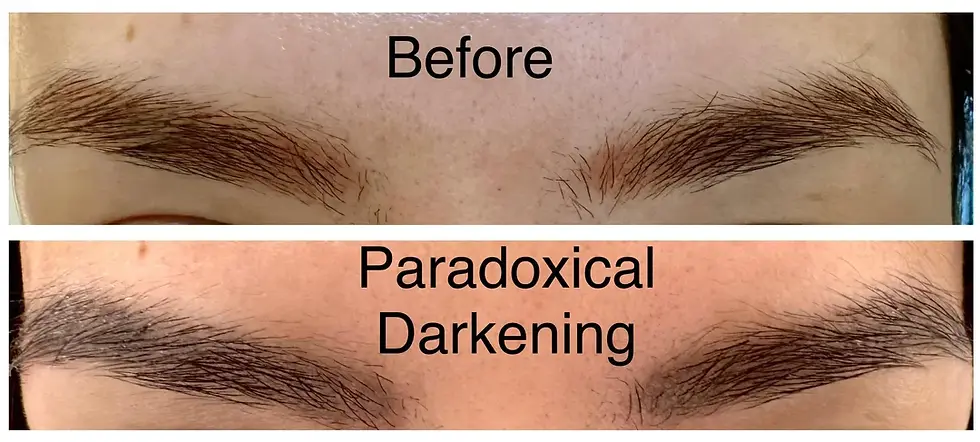
before and after tattoo removal the ''paradoxical darkening effect''
What Is Paradoxical Darkening?
Paradoxical darkening refers to the temporary or sometimes persistent darkening of tattoo pigment after laser treatment, rather than the usual lightening effect. This reaction is most common in:
Permanent makeup (PMU) such as eyebrow tattoos
Older tattoos, especially those that are 10 to 40 years old or more
Pigments that contain iron oxides or titanium dioxide
Instead of fading, the pigment appears darker immediately after treatment, which can be confusing or concerning if you are not aware of this possibility.
Why Does Paradoxical Darkening Happen?
This darkening is a chemical reaction, not a sign of technical failure during tattoo removal. Many cosmetic pigments include iron oxide (Fe³⁺), which has a reddish or brownish color. When the laser energy hits these pigments, it triggers a chemical change:
The laser causes a reduction reaction
Iron oxide (Fe³⁺) converts into ferrous oxide (Fe²⁺), which is black or darker in color
This change makes the tattoo pigment look darker right after the session
Similarly, pigments containing titanium dioxide, often used in lighter shades, can also shift in tone when exposed to laser energy.
In simple terms, the laser first alters the chemical structure of the pigment before breaking it down. This explains why the pigment darkens temporarily instead of fading immediately.
Is Paradoxical Darkening a Problem?
Not always. In many cases, paradoxical darkening is actually part of the normal tattoo removal process:
Once the pigment darkens, it often becomes more responsive to the 1064 nm Nd:YAG laser, which is commonly used in tattoo removal
With additional sessions, the pigment usually starts to fade gradually
That said, some pigments may not respond fully to laser treatment and could remain partially visible even after multiple sessions. This is especially true for very old tattoos or those with stubborn pigments.
How Many Laser Sessions Are Needed?
There is no fixed number of sessions for tattoo removal or pmu removal because every tattoo and pigment reacts differently. However, here are some general guidelines:
Typical Number of Sessions
4 to 8 sessions are usually needed to see visible fading
Older or more resistant pigments may require more sessions
When Paradoxical Darkening Occurs
Expect a slower start to the fading process
The pigment may darken initially before it begins to lighten
Patience is key, as the darkening phase is often temporary and part of the overall removal journey
What to Expect During Your Tattoo Removal Journey
If you experience paradoxical darkening, it’s important to stay informed and patient. Here’s what you can expect:
The darkening usually appears immediately after the first laser session
The pigment may stay darker for days or weeks before fading begins
Subsequent laser treatments will gradually break down the pigment, leading to lightening over time
Your technician may adjust laser settings to target the darkened pigment more effectively
Communicate openly with your technician about any concerns. Understanding that paradoxical darkening is a known reaction can help reduce anxiety and keep your expectations realistic.
Tips for Clients Considering Tattoo or PMU Removal
Ask your technician if paradoxical darkening is common with your specific tattoo or pigment type
Be prepared for multiple sessions and a gradual fading process
Avoid sun exposure and follow aftercare instructions to support healing and pigment breakdown
Keep track of your progress with photos to see changes over time .


Comments